
History
Founded in 1969, Mineração Taboca was a pioneer in tin mining and metallurgy in Brazil. In the 1980s, with the discovery of the Pitinga mine (AM), located 300 km from Manaus, it established itself as one of the country’s most important companies in the mineral sector.
In the heart of the Amazon Region, the company implemented an urban-industrial complex including housing, education, health, energy, and telecommunications, making Pitinga one of the most significant industrial projects in the country.
In Pitinga, the mining and processing of cassiterite and columbite ores are carried out. After years of research and investment, in 2006, the company began the process of replacing alluvial mining with primary rock extraction, a project named “Rocha-Sã.” Cassiterite and columbite are concentrated using various types of equipment, primarily jigs, spirals, tables, and electrostatic and magnetic separators.
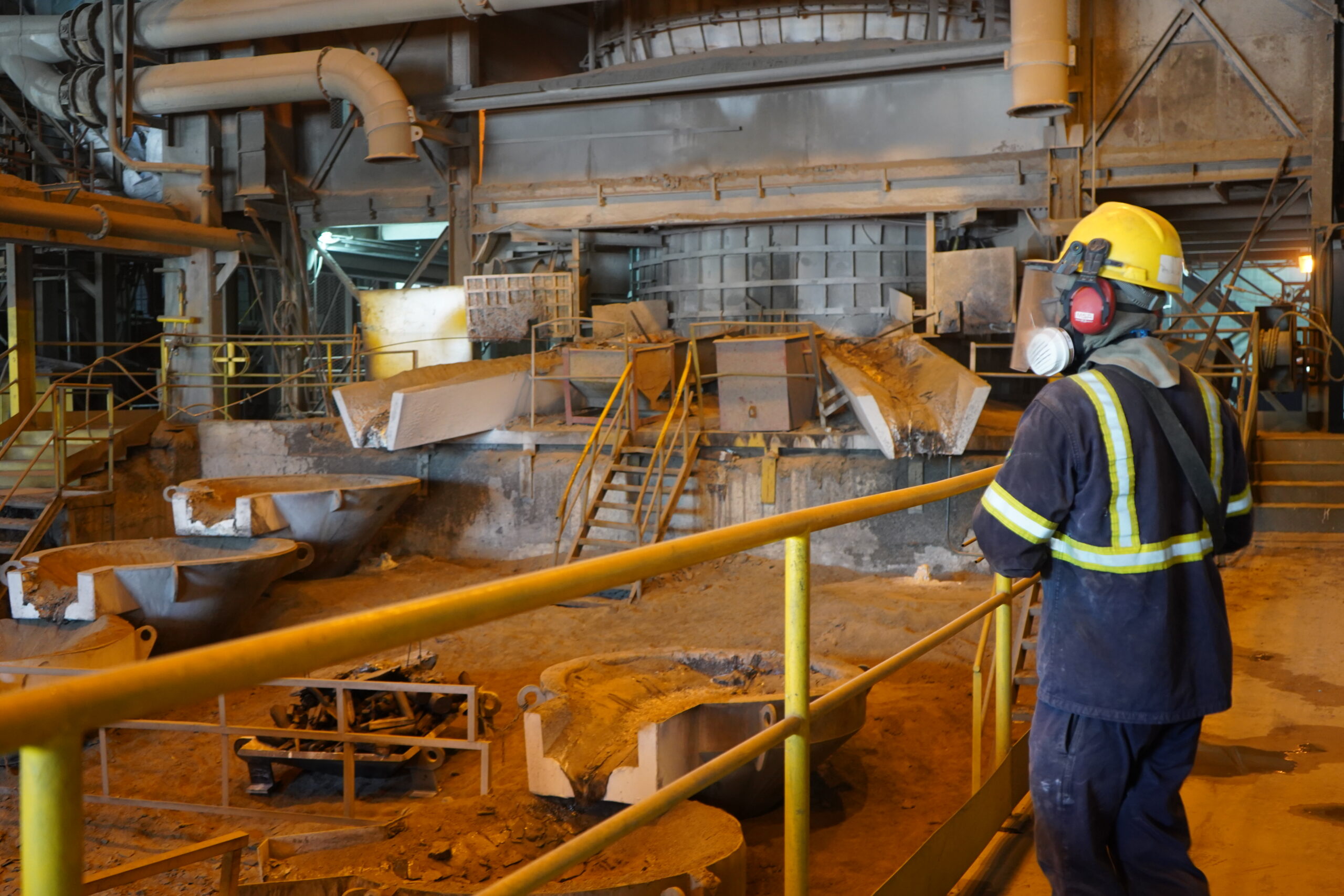
Mineração Taboca smelts the cassiterite concentrate at its branch in the state of São Paulo, where all the cassiterite concentrate production from the Pitinga Complex is sent. Tin extraction is performed using electric reduction furnaces.

The columbite concentrate is processed in Pitinga (AM) itself, where it serves as an input for the production of the FeNbTa metal alloy.
Mineração Taboca works in harmony with the environment, taking care to recover degraded areas. In Pitinga, since 1998, 2,900 ha have been recovered through the planting of approximately 740,000 seedlings of native forest species.
TIMELINE
- In 1961, Paranapanema, a family-owned company at the time, began its history as a heavy civil construction company.
- In 1969, Paranapanema discovered occurrences of cassiterite—tin ore—in the Amazon Region and obtained mining rights in several areas of the Rondônia tin province, founding Mineração Taboca S.A.
- In 1973, Paranapanema incorporated the company Mamoré Mineração e Metalurgia, verticalizing production and beginning to produce refined tin.
- In 1974, after years of investment, Paranapanema consolidated its cassiterite concentration technology from alluvial deposits.
- In 1979, through geological research, Mineração Taboca discovered the first promising signs of cassiterite in tributaries of the Pitinga River, in the state of Amazonas.
- In 1982, Mineração Taboca began implementation and mining at the site 300 km from Manaus (AM), which became known as Pitinga, generating resources that transformed it into a self-sustaining project.
- In 1987, investments in research and development allowed Mineração Taboca to advance technologies for processing ores rich in Niobium and Tantalum, which are also present in the Pitinga mine.
- In 1996, a pool of pension funds acquired controlling interest in Mineração Taboca and Mamoré Mineração e Metalurgia, adopting the name Paranapanema for the new conglomerate of companies focused on non-ferrous metal production.
- In 2002, Mineração Taboca obtained ISO 9001:2000 certification.
- In 2005, Mineração Taboca SA leased the facilities of Mamoré Mineração e Metalurgia in the state of São Paulo, consolidating tin mining and metallurgy activities under a single company.
- In 2006, after years of research and investment, Mineração Taboca began the process of replacing alluvial mining with primary rock extraction, a project named “Rocha-Sã”.
- In 2008, the traditional Peruvian mining group Minsur acquired controlling interest in Mineração Taboca and Mamoré Mineração e Metalurgia.
- In 2018, Mineração Taboca was recertified in ISO 9001:2015.
ROCHA SÃ PROJECT
Investments made to increase mine production through the extraction of ores directly from raw rock, replacing mechanized alluvial mining.
The utilization of primary rock, in addition to providing new minerals, optimizes and ensures the long-term sustainability of cassiterite extraction.
The objective of this internationally recognized and innovative project is to reach a production of 10,500 tonnes of refined tin per year, with the potential to reach up to 14,000 tonnes per year in a subsequent expansion phase.
